
On 16 and 17 January 2026, members of the Systems Neuroscience & Neurotechnology Unit participated in the “AI in Medicine” Symposium at Saarland University Hospital in Homburg, which brought together experts from research, clinical practice, and industry to discuss current and future applications of artificial intelligence in healthcare.
Prof. Daniel Strauss presented recent developments in AI-driven neuroscience and neurotechnology, highlighting the clinical relevance and translational potential of intelligent systems in diagnostics and patient Monitoring.
On the second day, Elena Schneider led an interactive workshop focused on the Health.AI project COGNIPANION. The workshop provided insights into how health data can be captured unobtrusively, combined with vehicle-specific information, and leveraged to create novel medical value. In addition, the transfer potential of these technologies to clinical applications currently under investigation was discussed.
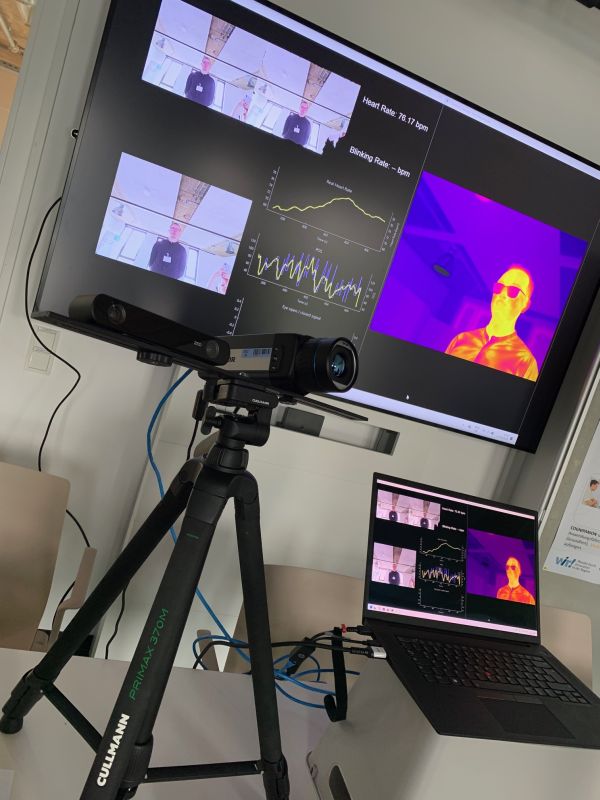
The unit also showcased the VI-Screen PRO project demonstrator, an AI-based, contactless screening system for early detection of virus-related respiratory infections. The demonstrator illustrated how advanced sensing and machine learning approaches can support preventive healthcare and future clinical applications.
Copyright Images: Health.AI
CDNS @ Bürgerfest in Saarbrücken
During the Bürgerfest celebrating German Unity Day, the Center for Digital Neurotechnologies Saar joined the University of Saarland’s pavilion to showcase how research can connect science and emotion. Together with partners from the pediatric medicine in Homburg, we presented projects that combine empathy and technology:
- A incubator system monitoring preterm infants without contact, designed to reduce stress and pain in preterm infants
- A digital “e-nose” for fast, non-invasive disease detection
- And a tactile companion bear that enables comforting touch from a distance, as part of the “Multi-Immerse” project
Visit from Prof. Erik Bojorquez-Vázquez
This week, we had the great pleasure of welcoming Prof. Erik Bojorquez-Vázquez from the Universidad Iberoamericana in Mexico City to the Systems Neuroscience & Neurotechnology Unit.
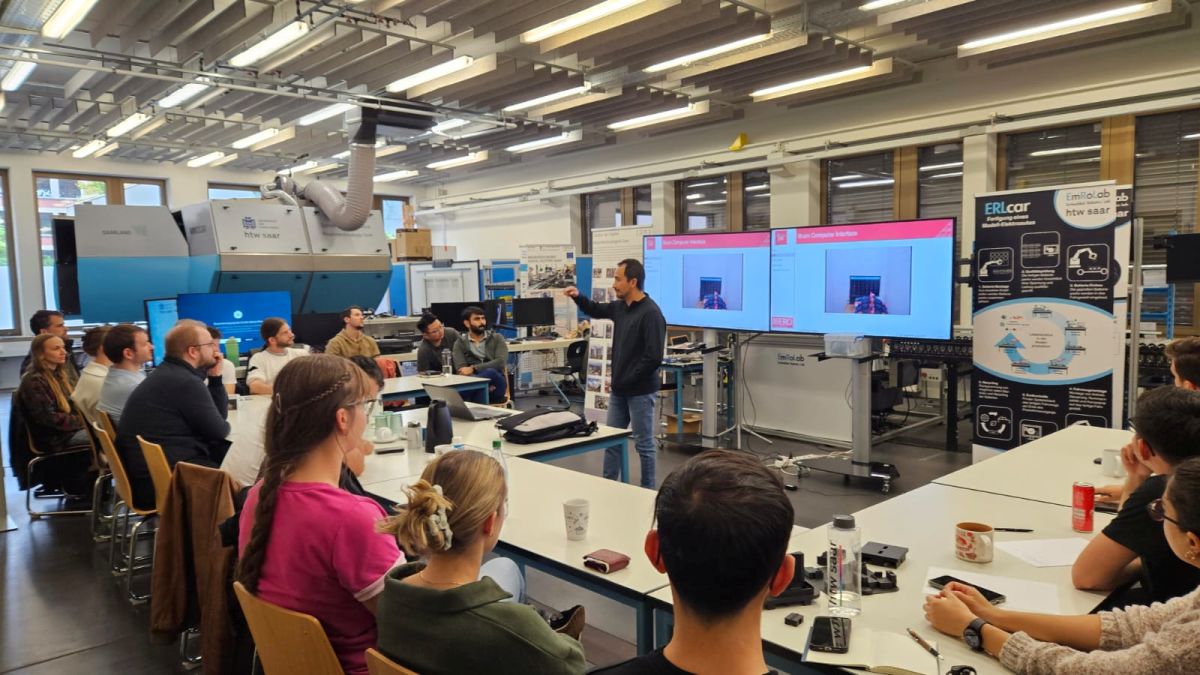
His visit sparked inspiring discussions about potential collaborations in the field of brain-computer interfaces (BCI) and neural signal analysis. Prof. Bojorquez-Vázquez also delivered an engaging talk on his recent research, focusing on the bidirectional intrinsic modulation of EEG band power time series and its promising applications for BCI systems.
Beyond the scientific exchange, we also enjoyed showing him around our laboratories, where he had the chance to experience some of our experimental setups firsthand (see picture below). Moments like these are the foundation of fruitful collaborations, and we are excited about the possibilities ahead.
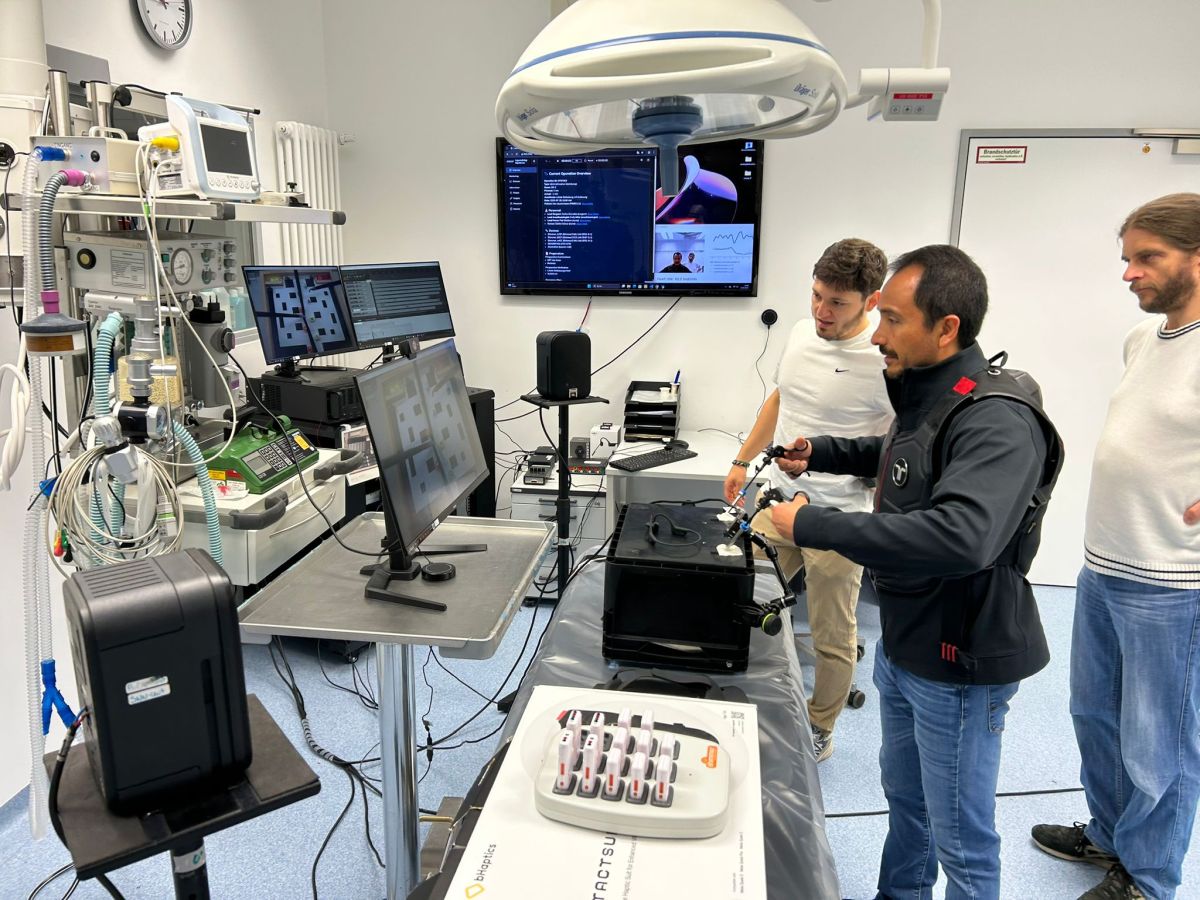
Thank you, Erik, for your visit – we look forward to future joint projects and continuing this exciting exchange!
Prof. Strauss Participates in German Ethics Council Hearing on New Neurotechnologies
Yesterday, Prof. Dr. Strauss, head of the Systems Neuroscience & Neurotechnology Unit, participated in a hearing by the German Ethics Council, discussing the ethical implications of new neurotechnologies. His presentation, titled “A Window into the Brain – How Can Neurotechnology Measure and Influence Attention and Emotions?”, explored the cutting-edge capabilities of neurotechnologies in measuring and potentially influencing brain functions like attention and emotions.

Engaging with the Future of Healthcare: Health.AI Network Event in Saarland
Last week, members of the Systems Neuroscience & Neurotechnology Unit had the pleasure of attending the event “Patientenorientierte Versorgungssteuerung – digital vor ambulant vor stationär”, hosted by the Health.AI Network in Saarland.
The event featured a series of insightful talks addressing critical topics such as access to healthcare, the current state of healthcare infrastructure, and the gender health gap. These discussions offered valuable perspectives on the challenges and opportunities in shaping a more equitable and efficient healthcare system.
We were proud to contribute to the program by presenting two of our collaborative projects with Health.AI:
- Cognipanion – exploring the car as a potential space for continuous health monitoring.
- intelEDAr – developing an intelligent electrodermal activity sensor for automated pain recognition.
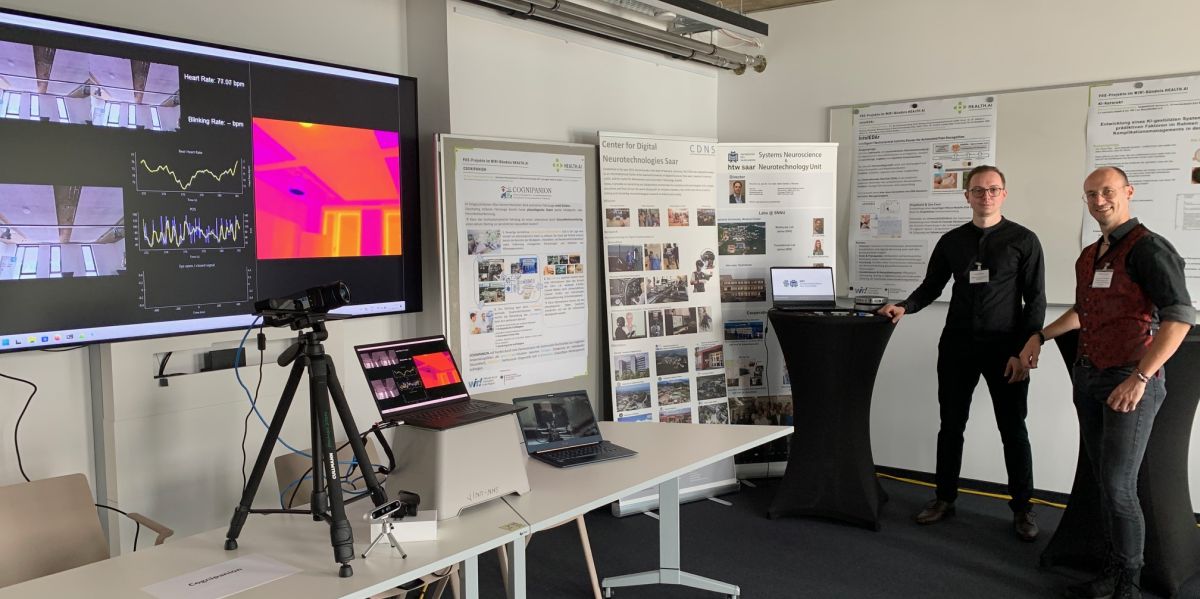
The event provided a fantastic platform for networking, knowledge exchange, and discovering other innovative projects in the digital health space. A heartfelt thank you to Health.AI for the invitation and the opportunity to be part of such a forward-thinking initiative!
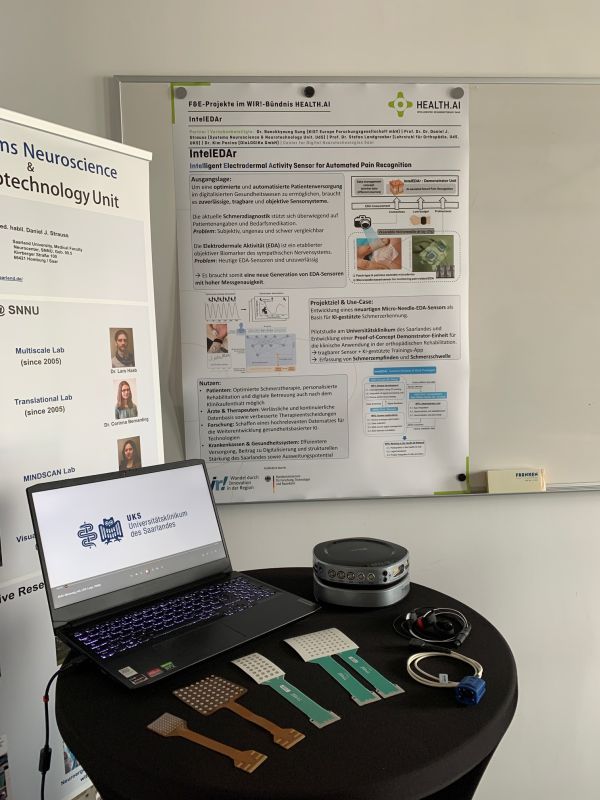
Event Announcement: Automotive Health – Cars as Future Health Platforms?
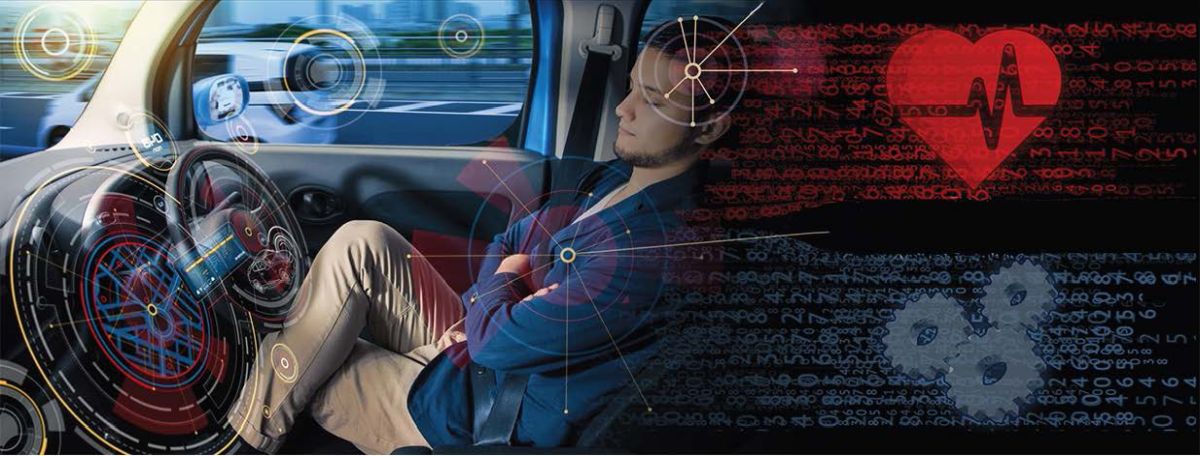
On 30 September 2025, the Saarland University Medical Center will host a special event on the emerging field of Automotive Health. This concept brings together mobility, digitalization and healthcare, aiming to transform vehicles into active partners for prevention, early diagnosis and emergency care.
The discussion will feature Dr. Manfred Knye, physician, author and the originator of the term Automotive Health. Together with experts from medicine, engineering and industry, the event will explore how cars equipped with smart sensors and driver monitoring systems could move beyond safety functions to become tools for long-term wellbeing.
Topics include the role of university medicine in ensuring clinical validity, opportunities for new business models such as Health as a Service, and the impact of upcoming EU regulations that will make driver monitoring mandatory from 2026.
The event is organized in cooperation with the Center for Digital Neurotechnologies Saar (CDNS) and saaris, highlighting the region’s pioneering role in linking mobility and healthcare.
When: 30 September 2025, 14:00–19:00
Where: Saarland University Medical Center
Minister Barke Visits CDNS to Explore the Future of Neurotechnology
As part of his 2025 summer tour, Saarland’s Minister of Economic Affairs, Jürgen Barke, visited the Center for Digital Neurotechnologies Saar (CDNS) at the University Hospital in Homburg. We were pleased to welcome him and showcase our research on how neurotechnology and digital innovation can transform clinical care.
CDNS is dedicated to advancing human-centered digital technologies in biomedicine, human-machine interaction, and sensory immersion through neuroscientific and neurotechnological research. During the visit, Minister Barke was introduced to several of our key initiatives, including the Multi-Immerse project – a collaboration between UKS, Saarland University, htwsaar, ZeMA, and DFKI – which enables emotionally rich virtual interactions for hospitalized children, helping bridge physical distance through immersive technology.
Additional projects presented included digital support inside operating theaters, contactless screening setups for adults and preterm infants, and our mobile research vehicle.
We greatly appreciated the Minister’s interest in our interdisciplinary work and his recognition of the importance of strengthening Saarland as a center for clinically relevant neurotechnology. His visit underscored the value of collaboration between science, medicine, and policy in shaping the future of healthcare.
SNNU @ the KIAS Final Event
Yesterday, we had the opportunity to present our project Digital Scrubs at the final event of the BMBF funding initiative “AI-based assistance systems for process-supporting healthcare applications (KIAS)” in Frankfurt. From compact project spotlights to thought-provoking workshops, the event highlighted the diversity and real-world potential of AI in healthcare – while also addressing the remaining hurdles on the way to clinical implementation. A true highlight: the open exchange with other project teams and the discussions on AI as a co-pilot in hospitals and how to carry research into practice. Many thanks to BMBF and the organizing team for this inspiring day – we’re taking home plenty of fresh ideas!
Kick-Off for VI-Screen PRO
Last week marked the official start of VI-Screen PRO, the follow-up to our successful BMBF-funded project VI-Screen. The project was launched with a productive kick-off meeting, bringing together all consortium partners. VI-Screen PRO is supported by the BMBF within the funding framework “BMBFTR – Innovationen im Einsatz: Praxisleuchttürme der zivilen Sicherheit”. The aim of the project is to develop a demonstrator system for contactless virus screening, targeting the mitigation of virus transmission in high-traffic environments. We are excited to collaborate once again with our esteemed partners: Saarland University, Saarland University Hospital, TU Berlin, and our new partner Cubical GmbH. Together, we look forward to a successful project phase and impactful outcomes.
SNNU @ Saarland Digital Health Congress
At the first Saarland Digital Health Congress, we had the opportunity to present our project Digital Scrubs and join more than 100 experts in discussing what healthcare could look like in 2030. We gained valuable insights through workshops on topics like the electronic patient record, user-centered design, and digitalization barriers. A true highlight: the keynote by Dr. Tobias Grandt – a passionate call for courage and progress in healthcare. An inspiring day full of exchange, future visions, and a shared goal: driving digital health forward in Saarland!